
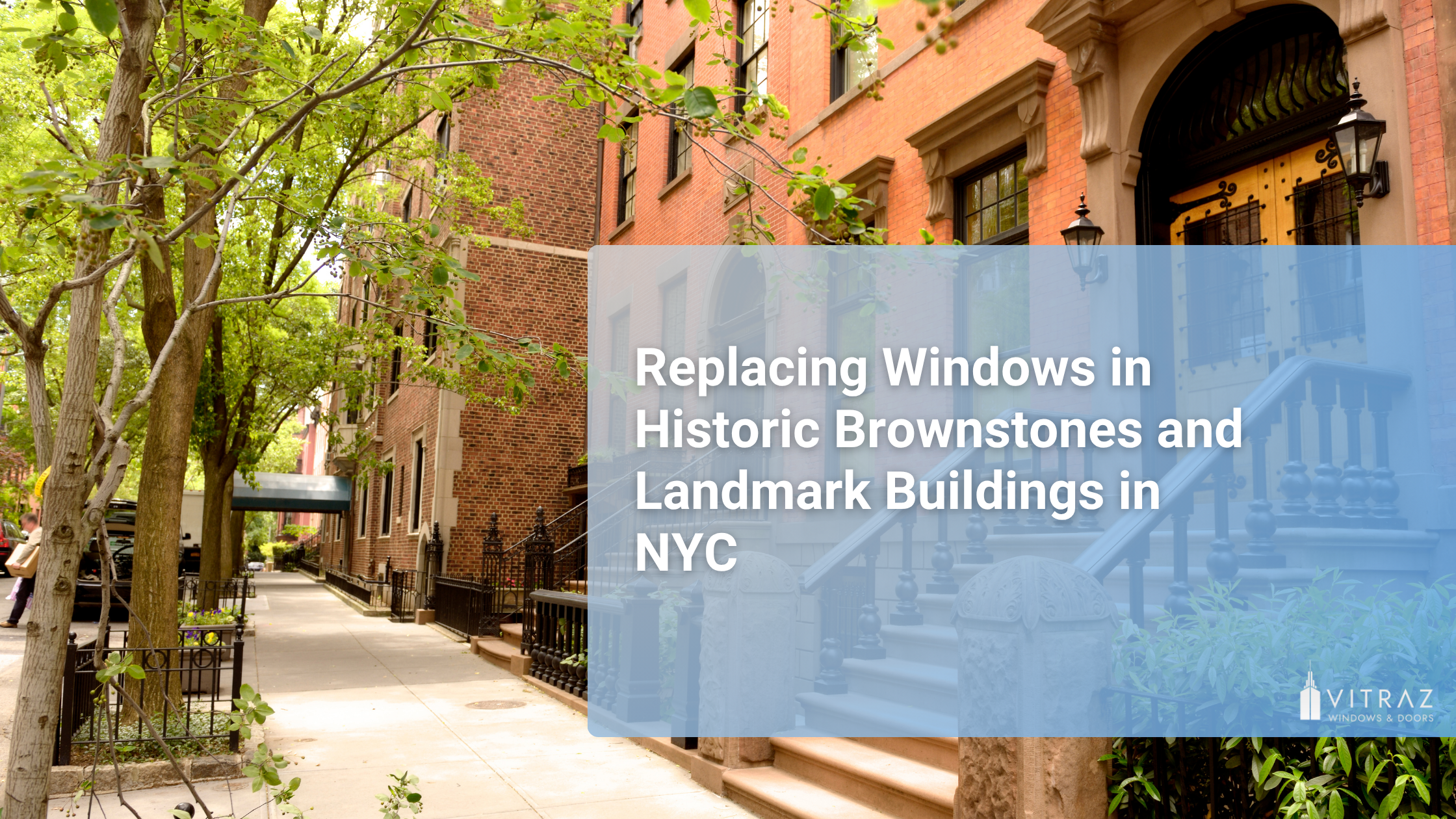
New York’s historic brownstones and landmark buildings are among the city’s most beloved architecture, prized for their character, craftsmanship, and connection to the past. Owning one is a privilege, but it also comes with responsibilities, and few tasks are as delicate as replacing the windows. Get it right and you preserve the building’s soul while dramatically improving its performance. Get it wrong and you can compromise both its appearance and its value.
At Vitraz Windows and Doors, we fabricate custom European aluminum windows in Brooklyn and understand the particular demands of historic and landmark properties across the city. Replacing windows in these buildings is a balance between honoring the original design and meeting modern standards for energy efficiency, comfort, and durability. This guide explains the challenges involved and how a thoughtful, custom approach lets you achieve both preservation and performance.
The Unique Challenge of Historic NYC Buildings
Historic buildings were constructed in a different era, with windows designed for their time. Those original windows often have distinctive proportions, slim profiles, decorative details, and configurations that define the building’s character. Over the decades, however, they may have deteriorated, and they rarely meet modern expectations for insulation, air tightness, or ease of use.
This creates a genuine dilemma. The original windows are part of what makes the building special, but they may be drafty, difficult to operate, and energy inefficient. Simply installing generic modern replacements would improve performance but strip away the character, while keeping deteriorated originals means enduring poor comfort and high energy costs.
The challenge is to bridge that gap, providing the performance of a modern window in a form that respects the historic design. This is not a job for off-the-shelf products, which is why custom fabrication is so valuable for historic and landmark work. The window has to be made to suit the building, not the other way around.
Understanding Landmark and Historic District Rules
Many historic buildings in New York are protected, either as individual landmarks or as part of designated historic districts. These protections exist to preserve the architectural character of the buildings and neighborhoods, and they typically place requirements on what can be changed, including windows.
For protected buildings, window replacements often must maintain the appearance of the originals, matching aspects such as the profile, configuration, proportions, and sometimes the materials or finishes. Changes may require review and approval before work can proceed. These rules vary depending on the specific designation and location, so it is essential to understand the requirements that apply to your particular building.
Navigating these requirements can feel daunting, but they are manageable with the right approach and the right windows. The key is choosing replacements that can be made to satisfy the aesthetic requirements while delivering the modern performance you want. Consulting the relevant guidelines, and often the appropriate authorities, early in the process helps ensure a smooth path.
Balancing Preservation With Modern Performance
The goal of a historic window replacement is to honor the past while living comfortably in the present. Fortunately, these two aims are not mutually exclusive. Modern custom windows can be designed to replicate the look of historic originals while incorporating the insulation, sealing, and durability that contemporary life demands.
This means a replacement can maintain the slim sightlines, proportions, and configuration that define a brownstone’s windows while adding a thermally broken frame, high-performance glazing, and tight modern seals. The result is a window that looks right in the historic context but performs like a modern one, keeping the home warm, quiet, and efficient.
Achieving this balance requires a fabricator who understands both the aesthetic sensitivities of historic work and the engineering of high-performance windows. When both are handled with care, a historic building can retain its character and finally shed the drafts and inefficiency of its original windows.
How Custom Aluminum Windows Can Match Historic Profiles
A common assumption is that only wood windows suit historic buildings, but modern aluminum systems can be surprisingly well suited to the task. Because aluminum is strong, it allows slim profiles that match the delicate sightlines of many historic windows, something that bulkier materials struggle to replicate.
Custom fabrication is the key. When windows are built to order, they can be shaped and detailed to echo the original design, matching profiles, configurations, and proportions closely. Finishes can be chosen to suit the building, including colors and effects that harmonize with the historic aesthetic, and even wood-effect finishes that mimic timber while offering the durability of aluminum.
This flexibility allows a custom aluminum window to sit comfortably in a historic facade, preserving the visual character while quietly delivering modern performance. For owners who want the best of both worlds, it is an approach worth serious consideration, particularly given aluminum’s longevity and low maintenance compared with wood.
Improving Energy Efficiency Without Losing Character
One of the strongest reasons to replace historic windows is energy efficiency. Original single-pane windows and worn frames are notorious for heat loss, drafts, and discomfort, and they drive up heating and cooling costs significantly. Upgrading them can transform the comfort and running costs of a historic home.
Modern replacements bring thermally broken frames, insulated glazing, and airtight seals that sharply reduce energy loss. A brownstone that was once cold and drafty in winter can become warm, comfortable, and far cheaper to heat, all without altering its cherished appearance. The improvement in daily comfort is often dramatic.
This is the heart of the case for thoughtful historic window replacement. You do not have to choose between preserving character and living comfortably. With the right custom windows, you keep the building’s historic soul and gain the efficiency and comfort of a modern home, a combination that also enhances the property’s long-term value.
Slim Sightlines and Authentic Aesthetics
The visual details of historic windows are what give them their charm, and preserving those details is central to a successful replacement. Slim sightlines, the narrow frame and glazing bar dimensions that let historic windows appear delicate and elegant, are especially important, because chunky modern frames can instantly make a replacement look wrong.
European aluminum systems excel here because their strength allows genuinely slim profiles. This makes it possible to match the fine sightlines of historic windows far more closely than bulkier materials permit. Details such as configuration, the arrangement of panes, and the finish can all be tailored to reflect the original design.
When these details are handled with care, the replacement windows read as authentic to the building, preserving the rhythm and character of the facade. Passersby and residents alike see windows that belong, while the owner enjoys the hidden benefits of modern performance. That authenticity is what distinguishes a sensitive historic replacement from a jarring one.
The Fabrication Process for Historic Replacements
Replacing windows in a historic building is a precise undertaking that depends on custom window fabrication done with care. It begins with careful measurement and documentation of the existing windows, capturing their dimensions, profiles, configurations, and details so the replacements can faithfully reflect them. Historic openings are rarely standard, so this accuracy is essential.
From there, the windows are designed to match the required appearance while incorporating the desired modern performance, and any necessary approvals are addressed. The windows are then fabricated to those exact specifications, ensuring they fit the openings precisely and honor the original design. This bespoke process is what allows historic replacements to succeed.
Because Vitraz fabricates locally in Brooklyn, this process is handled with direct communication and control, and turnaround is faster than importing. Working closely with the client throughout ensures the finished windows meet both the aesthetic and performance goals of the project, which is exactly what sensitive historic work requires.
Common Window Configurations in NYC Brownstones
New York brownstones and historic buildings feature distinctive window configurations that define their character, and understanding them helps guide a sensitive replacement. Tall, narrow proportions are common, often with double-hung arrangements and slim glazing bars that give the facade its characteristic rhythm and elegance.
Many historic windows also feature specific details, such as particular sightlines, decorative elements, and configurations that were typical of their era. These details are precisely what make the building special, and they are what a replacement must respect to preserve the historic appearance.
Recognizing these configurations is the starting point for a replacement that honors the building. Custom fabrication allows new windows to reflect the original proportions, arrangements, and slim profiles, so the facade retains its historic rhythm. Matching these details closely is the difference between a replacement that belongs and one that jars.
Handling Approvals and Documentation
For protected buildings, the approval process is a central part of a window replacement, and handling it well keeps the project on track. It typically involves understanding the requirements that apply to the building, preparing documentation that shows how the new windows will match the required appearance, and obtaining the necessary approvals before work begins.
Thorough documentation is key. Clear specifications, details of the proposed windows, and evidence that they will preserve the historic appearance all help demonstrate that the replacement respects the building’s character. Presenting this information well smooths the review and reduces the risk of delays or rejections.
Working with a fabricator experienced in historic work makes this far easier, since they understand what is required and can provide the detail and precision that approvals demand. Rather than navigating the requirements alone, you have support in specifying and documenting windows designed to be approvable, which is invaluable for protected properties.
Cost Considerations for Historic Replacements
Historic window replacement involves considerations that affect cost, and understanding them helps with planning. Custom fabrication to match specific historic profiles and configurations is more involved than installing standard windows, and the precision required for a faithful match is reflected in the work.
However, this investment delivers real returns. High-performance replacements dramatically reduce the energy costs of a drafty historic building, improving comfort and lowering bills for the life of the windows. They also protect and enhance the value of a cherished property, which for a historic or landmark building can be substantial.
Viewed over the long term, sensitive historic window replacement is an investment in both the performance and the preservation of a valuable building. The cost of custom work is offset by decades of energy savings, improved comfort, reduced maintenance compared with deteriorating originals, and the protection of the property’s character and value.
Preserving Value in a Landmark Property
For owners of historic and landmark properties, preserving value is a central concern, and windows play a meaningful role. Sympathetic, high-quality window replacement supports value in several ways, maintaining the historic appearance that makes the property desirable while adding the modern performance that buyers increasingly expect.
A building that retains its authentic character while offering contemporary comfort and efficiency appeals strongly to the market. Buyers of historic homes value both the period charm and the assurance that they will not be saddled with drafty, failing windows, so windows that deliver both are a genuine asset.
Poorly chosen replacements that compromise the historic appearance can detract from a landmark property’s value, which is why sensitivity matters so much. Investing in custom windows that preserve character and improve performance protects and can enhance the value of these special buildings, honoring their heritage while securing their future.
Working With a Fabricator Who Understands the Details
Historic window replacement is not a job for a one-size-fits-all supplier. It calls for a fabricator who understands the aesthetic sensitivities of period architecture, the requirements that protected buildings must satisfy, and the engineering needed to deliver modern performance in a historically appropriate form. That combination of skills makes all the difference.
Vitraz brings custom European aluminum fabrication and a genuine appreciation for the details that make historic buildings special. We work with owners of brownstones and landmark properties to create windows that preserve character while delivering the efficiency, comfort, and durability of modern systems. Local fabrication gives us the precision and flexibility that this work demands.
If you own a historic or landmark building in New York and want to replace its windows without sacrificing its character, we can help you do it right. Call Vitraz Windows and Doors at 917-418-0816 for a free quote and a conversation about your building and its needs.